
Choose a campaign naming convention with a few stable fields, a short approved vocabulary and one shared record. Start with source, medium and campaign; add detail only when it answers a reporting question you actually use. The best convention is not the most descriptive one. It is the one you can apply consistently when you are busy, and still understand when you review the campaign next month.
Start with the decision your report needs to support
Before choosing a format, finish this sentence: “After this campaign, I want to compare…” Your answer might be email against social traffic, one promotion against another, or two placements within the same newsletter. Each comparison needs a different piece of information. Collecting every possible detail makes link creation slower without necessarily making the eventual decision more focused.
Example: a solo designer is promoting a downloadable portfolio checklist through a newsletter and an organic social post. The immediate question is which channel brings visits to the checklist page. Source, medium and campaign can describe that task. A separate creative identifier becomes useful only if the designer also wants to distinguish two links or messages within a channel.
Give each field one job
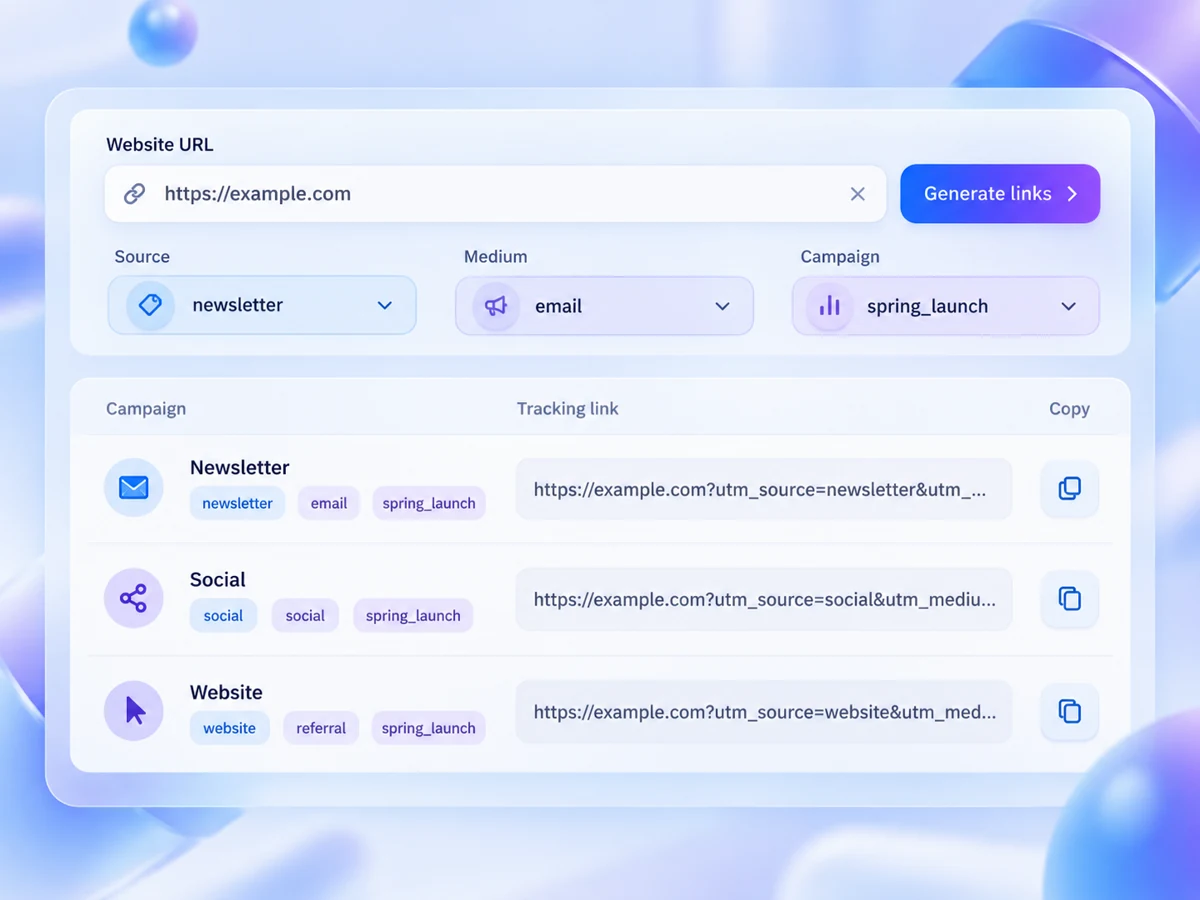
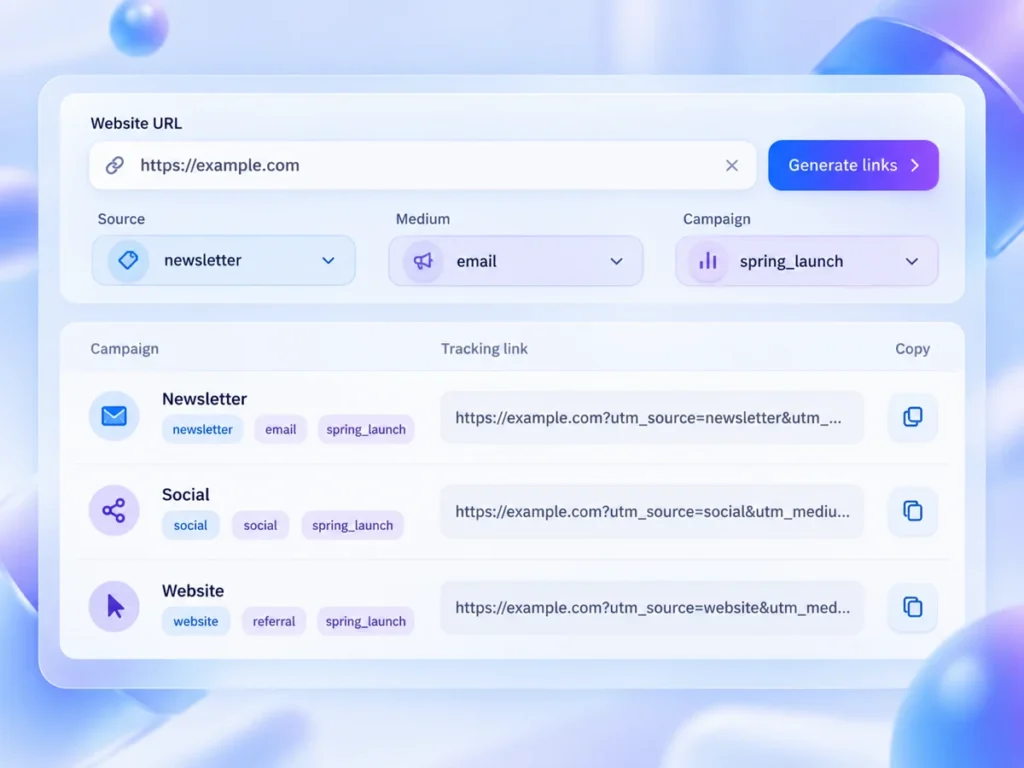
Campaign links commonly use UTM parameters to carry these labels. Keep the meanings separate rather than packing the whole campaign story into every field. Write a one-line definition for each field in your tracking sheet, then use it as the rule when creating another link.
- Source: the named origin of the traffic, such as a publication, social network or your own newsletter. Example value: studio-newsletter.
- Medium: the broad channel category. Example values: email and organic-social. Choose terms that match your reporting setup.
- Campaign: the initiative that connects related links across channels. Example value: portfolio-checklist-launch.
- Content, when needed: the particular placement or creative variation. Example values: opening-link and footer-link.
In this example, both promotional channels share the campaign value portfolio-checklist-launch. Their source and medium values differ. That lets the designer group the initiative together while still comparing its distribution. Putting email into the campaign name would make the name less reusable across channels.
Set a handful of rules, not a naming bureaucracy
Use lowercase values and one separator, such as a hyphen. This reduces accidental variations such as Email, email and e-mail. Keep an approved list of recurring source and medium values so you copy an existing label instead of remembering it differently each time. Check how your analytics setup handles these values before settling on the vocabulary: a tidy label is not automatically compatible with its channel grouping rules.
Decide when a campaign deserves a new name. A useful default is to create one for a distinct offer or initiative, not for every publication date. If a promotion repeats and you need to compare separate runs, add a consistent period suffix. Example: portfolio-checklist-launch-2026-09. If timing is not part of the decision, keep dates in the tracking sheet rather than lengthening every name.
Avoid unexplained abbreviations and personal information. Names should describe the marketing activity, not identify an individual recipient. Short codes save space but require a lookup; plain-language labels are easier to interpret but longer. For a small operation, readable labels usually make a sensible starting point.
Try the convention on one small campaign
Create a simple sheet with the destination, source, medium, campaign, optional content value and publication location. Use one real upcoming initiative as a trial rather than renaming your entire history. Before adopting the convention, run these four checks:
- Draft three links for different placements. Can you select their labels without inventing exceptions?
- Ask someone unfamiliar with the campaign—or revisit the sheet later—to explain what each value means.
- Open each tagged link and confirm that it reaches the intended destination with existing query parameters preserved.
- Check the relevant analytics report after allowing for its processing delay. Confirm which labels appear and how traffic is grouped.
Keep changes deliberate and expectations modest
Consistent names improve interpretation; they do not guarantee complete tracking or prove that a visit caused a sale. Consent choices, redirects and shared links can affect what you see. If the trial reveals a naming problem, document the revised rule and its start date. Keep a note linking old and new labels rather than silently changing their meaning. Start here: define the three core fields, choose their approved values and test them on your next campaign.